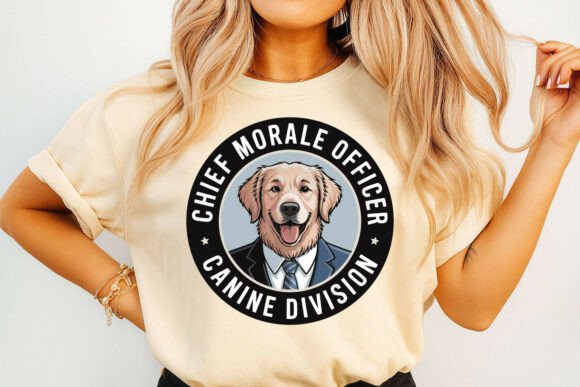
Chief Morale Officer Canine Division
When a design crosses my desk with a title like this, I expect personality. And Chief Morale Officer Canine Division delivers exactly that—a golden retriever in a suit and tie, presented as a proper corporate portrait. As someone who has stitched thousands of embroidery files over the years, I can tell you right away that this design works because it taps into something universal: the workplace mascot. Every office, every small business, every team has that unofficial morale booster. Turning that into a polished embroidery project is a smart move for anyone selling custom apparel or handmade gifts.
First Impressions: A Portrait That Works on Fabric
The moment I opened this embroidery file, I recognized the challenge. Pet portraits in professional attire walk a fine line between charming and cartoonish. This one leans into the charm without sacrificing the detail that makes a design feel finished. The golden retriever's expression reads as warm and approachable, exactly what a Chief Morale Officer should project. The suit and tie add structure to the layout, giving the design a clear focal point and a natural frame for the stitch work.
What I appreciate most is the balance between detail and stitchability. The face carries enough subtle shading to convey the dog's gentle expression, but the overall shape remains compact and well-defined. That matters when you're moving from a digital preview to an actual embroidery project. A design that looks great on screen can turn into a muddy mess at the needle. This one respects the limits of thread.
Where This Design Belongs in Your Product Lineup
After running through several mockups on different garment types, I can see Chief Morale Officer Canine Division fitting naturally into a range of products. Here is where it shines:
- Custom apparel – A crewneck sweatshirt or a structured polo shirt gives this portrait the canvas it deserves. The suit and tie motif reads clearly on a chest or sleeve placement.
- Tote bag design – This is one of those designs that makes people smile when they walk past. A sturdy canvas tote with this embroidered on the front becomes a conversation starter at markets or in the office.
- Embroidered patch – If you sell patches for uniforms, jackets, or bags, this portrait works as a standalone applique or a sew-on patch. The defined edges and solid fill areas make patch production straightforward.
- Personalized gift – Think of a custom gift for a dog-loving boss, a team lead, or a coworker who retirement or work anniversary. Add a name or a small text line below the design and you have a memorable personalized gift that stands out from generic plaques.
- Small shop merchandise – For an Etsy seller or a boutique owner, this design fits right into a curated collection of pet-themed or workplace humor products. It feels professional enough for a corporate gift but warm enough for a personal present.
I also tested it conceptually for baby embroidery and holiday embroidery. While not a traditional baby motif, a golden retriever in a suit works well on a toddler's sweater or a holiday-themed apron for a family pet lover. The design's versatility is one of its strongest assets.
Real Case: Preparing a Custom Embroidered Tote Bag for a Small Business Client
Last month, I took on a small run of custom tote bags for a local pet supply shop. The owner wanted something that reflected the store's friendly, professional vibe. I pulled up Chief Morale Officer Canine Division and ran a test stitch on a medium-weight cotton canvas tote. The result was clean, readable, and drew exactly the kind of reaction you want from a product meant to represent a brand. The golden retriever's face stitched out with enough definition to be recognizable, and the suit and tie provided a crisp, structured contrast against the fabric.
I placed the design centered on the front panel, about four inches wide, using a medium hoop. The satin stitch areas on the tie and collar details held their shape well, and the fill stitch sections in the face and suit gave the portrait depth without excessive density. The client ordered thirty bags for their staff and ended up selling an additional twenty as retail items. That is the kind of real-world performance that tells me a design has legs.
Where to Use Caution: Fabrics, Hoop Sizes, and Surface Challenges
No design is perfect for every surface. Here is where I recommend testing carefully before committing to production with Chief Morale Officer Canine Division:
- Small hoop sizes – If you are working with a 4x4 hoop, you will need to scale down the design considerably. At smaller sizes, the facial details may lose clarity. I suggest testing at 2.5 inches or larger to preserve the expression and the suit details.
- Textured fabrics – Heavily textured fabrics like thick fleece, boucle, or nubby wool can obscure the fine stitch work in the face. Stick to smoother surfaces like cotton, linen, poly-cotton blends, or microfiber for best results.
- Stretchy fabric – Performance tees, jersey knits, and stretchy polyt will require appropriate stabilizer and careful hooping. The portrait has enough interior stitching that fabric distortion could pull the design off-register. Test on a scrap piece first.
- Curved surfaces like caps – While it is possible to stitch this design onto a cap front, the width and height need to fit the curved panel. The tie and collar area may crowd the cap's seam line. I would recommend a larger cap profile or a flat front bucket hat instead.
- Dense stitch areas – Some sections, especially around the tie and the dog's fur transition, carry moderate density. On lightweight fabrics, this can cause puckering. A proper stabilizer and a test stitch will tell you if your fabric can handle it.
Visual Appeal and Customer Trust: What This Design Communicates
When a customer sees a finished product with Chief Morale Officer Canine Division, they are not just seeing a dog in a suit. They are seeing a concept that feels both clever and personal. That combination builds customer trust and makes the product feel like more than just a print. It feels like a real handmade product with thought behind it.
For handmade presentation and brand consistency, this design holds its own. The professional look of the suit and tie elevates the playful subject matter, which means you can market it to corporate clients, pet lovers, and gift buyers without feeling like you are pitching a novelty item. It has a sophistication that translates well into printable mockups and design assets for your online shop.
From a commercial embroidery standpoint, the design's structure makes it reliable for repeated production runs. Once you dial in your thread colors and stabilizer choice, you can stitch multiple units with consistent results. That reliability is what keeps a small shop product profitable and prevents waste.
Practical Embroidery Designer Notes Before You Stitch
Before you load this digital embroidery file and hit start, take these steps seriously. They will save you time, thread, and frustration:
- Test on scrap fabric first. Run a test stitch on the exact fabric you plan to use. Adjust tension and stabilizer before you touch your final product.
- Check thread color contrast. The golden retriever's fur may blend into lighter fabrics. Use a contrasting thread color for the suit, tie, and background elements to ensure the portrait reads clearly.
- Review stitch density. If your software allows it, check the density map of the design. Look for areas where too many stitches overlap—those spots can cause thread breaks or fabric damage.
- Confirm hoop size. Make sure your hoop can accommodate the design at the size you plan to stitch. Do not assume it will fit—measure it.
- Inspect small details. The eyes, nose, and tie knot carry the most expression. If those areas look compressed or unclear in your test, increase the design size slightly or simplify the color palette.
- Test in black and white mockups. Print a grayscale version of the design to see how the values read. A design that relies heavily on color contrast may lose definition in a single-color stitch-out.
- Compare light and dark fabric backgrounds. Stitch the design on both a light and a dark fabric swatch. The suit and tie may disappear on dark backgrounds unless you adjust thread choices.
- Use proper stabilizer. For medium-weight fabrics, a tear-away stabilizer works. For stretchy or lightweight fabrics, use a cut-away stabilizer to maintain shape.
- Check licensing before selling. If you plan to use Chief Morale Officer Canine Division for commercial embroidery or sell finished products featuring the design, verify the license terms. If you want to sell the embroidery file itself as a digital product, confirm that the license allows redistribution.
Final Thoughts on Adding This Design to Your Catalog
Chief Morale Officer Canine Division is not a design you will stitch once and forget. It has the kind of cross-appeal that keeps customers coming back for different product types. Whether you are a creative entrepreneur building a craft business around custom gifts, an apparel decorator looking for fresh motifs for your t-shirt designs rotation, or a hobbyist making something special for a friend, this portrait earns its place in your library.
The design fits naturally into the graphics category of pet portraits and workplace themes, but its real strength is how it translates from a digital preview into a stitched product that feels polished. It is not every day you find a design that makes people smile and also holds up to the scrutiny of a commercial embroidery run. This one does both.
If you are adding it to your lineup, take the time to test it at your intended size and on your chosen fabric. Get comfortable with the thread palette that brings out the golden retriever's warmth and the suit's structure. Once you do, you will have a reliable design that works across custom apparel, embroidered patches, tote bag design projects, sweatshirt embroidery, and more. That kind of versatility is exactly what a busy shop needs.