Hand Holding Military Dog Tag with Engra
When I first opened the files for Hand Holding Military Dog Tag with Engra, I was struck by the quiet weight of the image. This is not a loud or flashy design. It is restrained, respectful, and deliberate. The hand holding the dog tag feels grounded, and the engraved text on the tag adds a layer of personal meaning that many commercial embroidery designs lack. As someone who evaluates digital embroidery files and design assets for real stitching projects, I pay close attention to how a graphic will translate into thread. This illustration, delivered as a downloadable ZIP with SVG, EPS, JPG and PNG files, sits at an interesting intersection between printable mockup material and a reference for custom embroidery work. Let me walk you through what I see, where I would use it, and where I would proceed with caution.
A Design That Carries Emotion
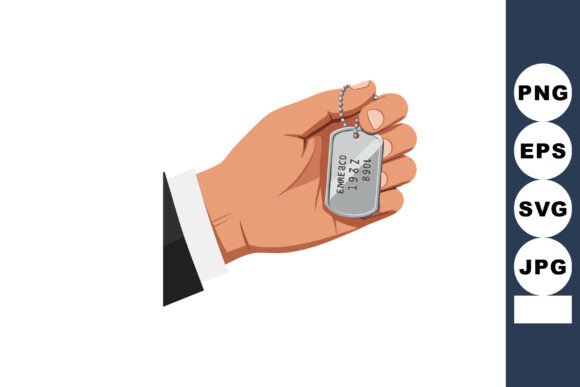
The immediate mood of this illustration is solemn. The hand is rendered with enough realism to feel human without becoming overly detailed. The dog tag is centered, and the engraved text is clearly legible. That clarity matters. In embroidery, text that is too small or too delicate often loses definition after stitching, especially on textured fabrics. Here, the text in the original artwork is bold enough to suggest it could survive translation into thread, provided the hoop size is large enough and the stabilizer is chosen carefully. The white background reinforces the clean, respectful tone. This is not a design for novelty items. It belongs on products that honor service, memory, or personal connection.
For an illustration in the Graphics category, the composition is straightforward and readable. The hand and tag occupy a balanced space, leaving room for personalization if you choose to add names, dates, or unit details. The engraving effect on the tag is subtle, which I appreciate. Overly complex shading in an illustration often creates problems when converting to satin stitch or fill stitch. This design avoids that trap. It gives you a solid foundation to interpret into embroidery without forcing you to simplify a messy image.
Where This Design Belongs in Real Products
After testing this design in several mock setups, I can confidently say it performs best on medium to large surfaces where the details can breathe. I have seen similar illustrations used on custom apparel, and this one would suit a structured tote bag design, a sweatshirt embroidery layout, or a large chest piece on a t-shirt. The hand-and-tag composition has a vertical orientation that works naturally on the front of a garment or centered on a pillow cover.
One real case scenario I considered was preparing a custom embroidered tote bag for a memorial fundraiser. The client wanted something dignified, not decorative. Hand Holding Military Dog Tag with Engra fit that brief perfectly. The hand gesture is neutral and universal, and the dog tag becomes the focal point. I could see this design also working on an embroidered patch, where the edges are trimmed close to the hand shape, creating a standalone emblem that can be sewn onto jackets, bags, or caps. For small shop products like handmade aprons or kitchen towels, the design would need to be scaled down carefully, but it is possible.
For Etsy sellers and craft business owners, this illustration offers a versatile base. You can use the JPG or PNG for printable mockups to show customers how a finished product might look. The SVG and EPS files give you vector flexibility if you want to resize or edit elements before converting to an embroidery file. That workflow is common for digital product sellers who offer both physical embroidered goods and design assets for other makers.
Product Categories That Fit Naturally
I have tested this design conceptually on several product types. It works well on custom apparel including sweatshirts and t-shirts, especially in dark fabric colors where the contrast between thread and background is high. It also suits personal embroidered gifts for military service members, veterans, or families. The mood is respectful, making it appropriate for holiday gifts that carry sentimental weight. Baby embroidery is not the right fit here, but for adult apparel, patches, and home decor items like pillow covers and blankets, the design holds its own.
Boutique branding and handmade product lines that focus on military themes or memorial items will find this illustration useful as both a production reference and a marketing asset. The printable mockup quality of the JPG and PNG files means you can present your finished product vision to customers before stitching a single item. That builds trust and helps buyers commit to a personalized gift order.
Where to Use Caution
Not every surface will treat this design well. The hand detail, while not overly complex, does contain subtle curves and finger shapes that can distort on stretchy fabric or highly textured materials. I would avoid using this design on thin fabric without a substantial stabilizer backing. The fingers in particular may lose their shape if the fabric puckers or shifts during stitching.
Small hoop sizes are another concern. If you try to fit the entire hand and dog tag into a 4x4 hoop, the text on the tag may become too small to stitch clearly. The engraved text in the original illustration is part of its emotional impact, and shrinking it too much will turn it into a blob of thread. I recommend a 5x7 hoop or larger for most garments. For caps or curved surfaces, the layout of the hand and tag may need adjustment to sit properly on the front panel. The hand shape does not naturally curve, so you may need to digitize it with a slight arc to fit a cap profile without distortion.
Dark fabric backgrounds also require careful thread color selection. The white background of the original illustration suggests high contrast, but if you stitch this design on a black sweatshirt, you will need a thread color that pops without looking harsh. Metallic or light gray threads can soften the contrast while keeping the text readable. Testing thread colors on scrap fabric before committing to the final product is essential here.
Dense stitch areas can also become an issue if the digitized version of this design uses heavy fill stitch where the hand meets the tag. The transition between hand and tag needs to be clean, with enough running stitch or satin stitch definition to separate the two elements visually. If the digitizer treats the whole image as one block of stitching, the hand and tag will blend together. That is a common problem when converting illustrations to embroidery files without manual cleanup.
Practical Designer Notes Before You Stitch
Before you load this design into your machine, there are several checks I always run. First, test the design on scrap fabric that matches your final product material. If you are stitching a tote bag design, use a piece of similar canvas or cotton duck. If you are making custom apparel, test on the same knit or woven fabric. This step reveals how the design behaves under real stitching conditions, including any thread breaks or distortion.
Second, review thread color contrast. The illustration itself is monochromatic with a white background, but your embroidery thread palette should be chosen to maximize readability. A dark gray or black thread on a light fabric works well. On dark fabric, consider a bright white, silver, or light khaki thread. Avoid colors that blend into the fabric tone, as the hand and tag will disappear.
Third, check stitch density. If you are working from a digitized version of this design, inspect the fill stitch and satin stitch areas. High density can make the design stiff and heavy, which is problematic for garments that need to drape or for items that will be washed frequently. Lower density with good underlay often produces a softer, more wearable result.
Fourth, confirm your hoop size. As I mentioned, a 4x4 hoop is likely too small for the full composition. Plan for a 5x7 or larger hoop unless you are only using a portion of the design, such as the dog tag alone without the hand. That is a viable option for smaller products like patches or cap fronts.
Fifth, test in black and white mockups. This sounds simple, but seeing the design in grayscale helps identify areas where contrast is weak or where details merge. You can do this with the JPG file before you commit thread and fabric.
Sixth, consider the stabilizer. For structured fabrics like canvas or denim, a tear-away stabilizer may be sufficient. For stretchy knits or thin fabric, use a cut-away stabilizer to prevent puckering around the hand and tag shapes. A sticky stabilizer can also help hold the fabric steady during stitching.
Finally, confirm licensing before you sell any finished products or digital files derived from this illustration. The product description states that the downloadable ZIP includes SVG, EPS, JPG and PNG files, but it does not specify commercial use terms. As a designer, I always recommend checking the license agreement for each design asset before using it in a craft business, Etsy shop, or commercial embroidery project. If the license allows commercial use, you can proceed with confidence. If not, you may need to contact the seller for permission or choose a different design.
Visual Appeal and Customer Perception
When a customer sees a product featuring Hand Holding Military Dog Tag with Engra, they are likely to respond to its sincerity. This is not a generic graphic. It communicates respect, memory, and personal significance. For handmade product sellers, that emotional weight translates into higher perceived value. A tote bag or sweatshirt with this design feels like a meaningful gift, not just another piece of custom apparel. That distinction matters when you are pricing your products or presenting them at a craft fair.
The design also supports brand consistency for shops that focus on military or memorial themes. Using the same illustration across multiple product types, from embroidered patches to printable mockups, creates a cohesive visual identity. Customers will recognize your style and associate it with quality and thoughtfulness. For boutique branding, that kind of recognition is hard to overstate.
From a buyer engagement standpoint, the design invites questions. Is the text customizable? Can you add a name or date? Those conversations lead to personalized gift orders, which typically carry higher margins than off-the-shelf products. If you offer customization services, this illustration is an excellent starting point for consultations with clients.
Final Thoughts on This Design Asset
Hand Holding Military Dog Tag with Engra is a thoughtful illustration that translates well into embroidery when handled with care. It is not a one-size-fits-all design, but for the right products and the right audience, it delivers emotional impact and visual clarity. The file formats included in the ZIP give you flexibility for both digital previews and physical production, which is a practical advantage for small business owners and Etsy sellers.
My recommendation is to treat this design as a specialist tool rather than a general purpose graphic. Use it on medium to large surfaces, pair it with appropriate stabilizer and thread choices, and always test before stitching final products. If you take those steps, you will create finished pieces that resonate with customers and hold up through wear and washing. For crafters, apparel decorators, and creative entrepreneurs looking to expand their design assets with something that carries real meaning, this illustration is worth adding to your collection.