Red Dog Playing with Purple Hula Hoop
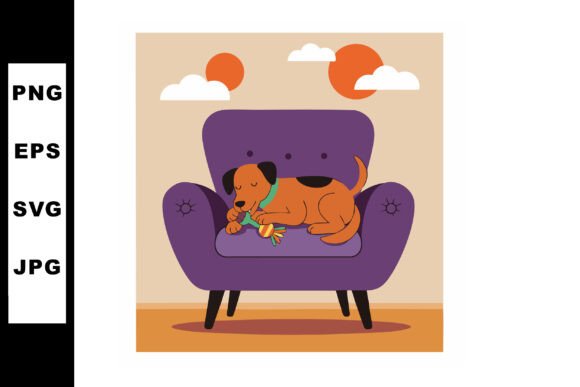
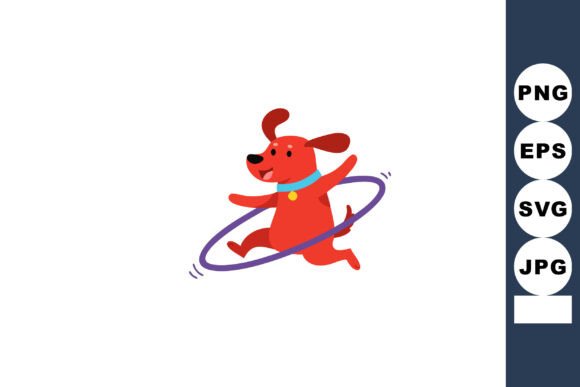
When I first opened Red Dog Playing with Purple Hula Hoop Ve, I knew immediately this wasn’t going to be a quiet, subtle embroidery project. The energy hits you before the details settle in. A bright red dog, full of motion, engaged with a purple hula hoop — it’s playful, a little bold, and frankly, a breath of fresh air for anyone tired of safe, predictable designs. This vector illustration, provided as an illustrations product in the graphics category, has the kind of personality that translates well into stitched form, but only if you treat it with the respect it deserves. Let me walk through what I see as a working designer evaluating this machine embroidery design for real projects.
First Impressions: Motion, Contrast, and Mood
The first thing that grabs me is the color contrast. The red dog against a purple hula hoop is not subtle, and that is exactly why it works for custom apparel and handmade product lines. In embroidery, contrast is your best friend. If you digitize or adapt this embroidery file well, that red will pop off nearly any background — white, cream, denim, even light gray. The purple hoop adds a secondary focal point that keeps the eye moving around the design. The dog’s posture suggests action, which makes the embroidery project feel alive rather than static. That matters when you are making personalized gifts or small shop product items for customers who want something with emotional pull.
The layout is clean enough that it won’t fight with seams or pockets, but detailed enough that it holds interest. I see a natural use for this on a sweatshirt embroidery or a tote bag design where the playful mood can carry the whole product. The fill stitch areas will need attention when converting the vector to an embroidery file, but the shapes are distinct and not overly complicated. That is a huge advantage when you are scaling a craft business and need consistent results across multiple units.
Real Project Scenario: The Custom Tote Bag That Started a Conversation
I recently prepared a run of custom tote bags for a local pet boutique that wanted something energetic for their spring launch. I took Red Dog Playing with Purple Hula Hoop Ve and digitized it carefully, keeping the satin stitch for the hoop and a clean fill stitch for the dog’s body. The result was exactly what I hoped for — the red held its vibrancy, the purple hoop created a ring of contrast, and the entire piece felt like a snapshot of joy. Customers at the boutique stopped to ask about the bag before they even asked about the products inside. That is the kind of engagement a well-chosen machine embroidery design can generate, and it is why I keep coming back to illustrations like this one when I want to create finished product that sells itself.
For Etsy seller folks and handmade shop owners, that kind of buyer interest is gold. The design doesn’t need a lot of explanation. It reads instantly as fun, energetic, and high-quality. That reduces friction in the purchase decision, whether you are selling the personalized gift or the digital embroidery file itself.
Where This Design Shines
Red Dog Playing with Purple Hula Hoop Ve performs beautifully on a range of products, but some applications let its strengths really stand out.
- Sweatshirt embroidery and t-shirt embroidery — The contrast and motion work well on soft, everyday garments. Use a medium-weight stabilizer to keep the stitch density from distorting the fabric.
- Baby embroidery — Despite the bold colors, the playful mood suits children’s items. A onesie or small blanket with this design reads as cheerful rather than overwhelming.
- Embroidered patch — The clean outer shape makes this a strong candidate for a patch. Once stitched with a satin stitch border, it becomes a durable applique that can be ironed onto bags, jackets, or hats.
- Pillow cover and nursery decor — The circular theme with the hula hoop naturally fits a rounded composition, which works well on pillow fronts or framed handmade product decor.
- Holiday embroidery and gift projects — This design does not reference any specific holiday, so it works year-round, but its cheerful tone makes it a natural fit for birthday gifts and celebration-themed merchandise.
- Printable mockup and digital product previews — Because the design is provided as a vector illustration in the downloadable ZIP with SVG, EPS, JPG, and PNG files, you can easily create printable mockup images for your shop listings without stitching a single sample first. That is a practical time-saver for creative entrepreneurs who need to validate a product idea quickly.
Where to Use Caution
No design is perfect for every application, and I always appreciate when a reviewer is honest about limitations. Here is where I would be careful with Red Dog Playing with Purple Hula Hoop Ve.
- Small hoop sizes — If you are working with a 4x4 hoop, you will need to scale this design down considerably. That risks losing the detail in the dog’s face and the hoop’s circular shape. I recommend testing at your intended size before committing to a full production run.
- Textured fabric and dark fabric — The red dog can get lost on dark backgrounds if the thread color is not carefully chosen. On textured fabrics like fleece or heavy canvas, the stitch density may need adjustment to keep the shapes crisp. Test on a scrap piece first.
- Curved surfaces like caps — The circular nature of the hula hoop may distort when stitched onto a curved cap surface. If you plan to use it for cap embroidery, consider reducing the overall size and using a firm stabilizer to maintain the round shape.
- Thin or stretchy fabric — The fill stitch areas, especially on the dog’s body, can pull or pucker lightweight fabrics. A cutaway stabilizer is non-negotiable here. Do not skip the test stitch.
- Products that need frequent washing — For items like kitchen towels or baby bibs, the thread colors should be colorfast, and the stitch density should not be so high that it creates a stiff panel. Consider reducing the density slightly for items that will see heavy wash cycles.
Practical Embroidery Designer Notes
I always tell my students and clients: do not trust a digital preview alone. Here is a checklist I run through when I evaluate an embroidery file derived from an illustration like this one.
- Test on scrap fabric first. Use the same fabric type you plan to use in production. Check for puckering, thread breaks, and color bleeding.
- Check thread color contrast. The red and purple work well together, but if you substitute threads, test the new combination under natural light and store lighting. Sometimes a red that looks bright in the package reads as orange or rust once stitched.
- Review stitch density. If the design was auto-digitized from the vector, the stitch density may be too high or too low. Manual adjustment is often needed. Look for areas where the fill is too tight, which can cause fabric distortion.
- Confirm hoop size. Before you cut fabric or stabilizer, confirm that the design fits your hoop without crowding the edges. A design that touches the hoop edge can cause registration issues.
- Inspect small details. The dog’s eyes, ears, and the hoop’s overlap are potential weak points. If any detail is smaller than 2–3 mm, consider simplifying it or enlarging the design.
- Test in black and white mockups. Print the design in grayscale to see whether it relies solely on color for readability. A good design should still be recognizable without color.
- Compare light and dark fabric backgrounds. Stitch a sample on white and a sample on dark fabric. Adjust thread colors or add a dense underlay if the design gets lost on dark grounds.
- Use proper stabilizer. For this design, I recommend a medium-weight cutaway stabilizer for most fabrics. For stretchy knits, a tearaway with a stabilizer layer behind it works better.
- Check licensing before selling. The product comes as a downloadable ZIP with SVG, EPS, JPG, and PNG files, but you must confirm whether the license allows commercial embroidery use. Some illustrations and graphics files are for personal use only. If you plan to sell finished product or digital embroidery file versions, verify the terms first. When in doubt, contact the seller.
- Plan for scaling. If you are running a craft business or Etsy seller shop, consistency across products matters. Once you finalize your settings for this design, document them so every future run matches.
How This Design Affects Product Value and Customer Trust
One thing I have learned after years of reviewing machine embroidery design options is that customers buy the feeling first and the product second. Red Dog Playing with Purple Hula Hoop Ve delivers a feeling of joy, playfulness, and energy. When that feeling is stitched into a handmade product, it elevates the entire item. A plain tote bag becomes a conversation starter. A basic sweatshirt becomes a statement piece. That directly affects product value and customer trust because buyers perceive the care and thought behind the design.
For small shop product owners and creative entrepreneurs, this translates into higher perceived quality and stronger brand recognition. If your shop is known for playful, vibrant designs, using an illustration like this one consistently across your product line builds a visual identity that customers remember. It also helps with giftability — a design that makes people smile is easier to sell as a gift for someone else.
I also appreciate that the graphics format provides flexibility. Because the download includes SVG, EPS, JPG, and PNG files, I can use the same asset for printable mockup creation, social media posts, and even packaging inserts. That kind of versatility saves time and keeps my brand presentation consistent across channels.
Final Thoughts Before You Stitch
Red Dog Playing with Purple Hula Hoop Ve is not a design you stitch on autopilot. It rewards attention to thread choice, stabilizer selection, and hoop placement. But when you get those elements right, the result is a machine embroidery design that feels alive, engaging, and commercially viable. Whether you are making personalized gifts for a handful of customers or producing a full line of custom apparel for a boutique, this design has the personality to carry the product.
For apparel decorators and digital product sellers, the key is to treat the vector as a starting point, not a finished embroidery file. Test it. Adjust it. Own the process. That is what separates a good product from a great one, and this design has the potential to be great in the right hands. If you approach it with the same care you would any high-quality illustrations asset, you will end up with a finished product that your customers will notice, remember, and come back for.